


It’s easy to tell when we like a coffee. It’s harder to explain why: it might be the body, the sweetness, a particular aroma, or the way the flavor lingers after the last sip.
A small tasting at home can help you find out. You don’t need any professional expertise, nor do you have to identify complex aromas: all you need are three fairly different coffees, prepared the same way, and a few notes taken while tasting them. The goal isn’t to determine which coffee is the best, but to better understand what kind of coffee you like.
Choose 3 coffees that are quite different from one another
Three cups of coffee are a good starting point for a tasting at home. They allow for a meaningful comparison without making it difficult to remember the differences between one cup and another.
In fact, comparing coffees makes tasting much easier. Without experience, it can be difficult to determine whether a coffee has a lot of body in general; by placing three cups side by side, it’s easier to notice that one seems fuller-bodied, one lighter, and one somewhere in between.
To make the experiment interesting, it’s best to choose coffees with sufficiently different characteristics. You can compare three different origins, three sensory profiles that are quite different from one another, or three deliberately distinct blends. It’s not necessary to know all their characteristics in advance. In fact, it can be interesting to read the flavor notes listed on the package only after the first taste, so as not to be influenced by what you expect to find.
Prepare them all the same way
To truly understand the differences between coffees, you need to minimize all other variables as much as possible. If the amount of coffee, water, grind size, or brewing method all change at the same time, it becomes difficult to determine what’s causing the perceived sensations. You don’t need to follow a professional protocol. You can use the method you’re already familiar with, simply making sure to keep it consistent for all three coffees.
They should remain as constant as possible:
- amount of coffee;
- amount and type of water;
- grinding;
- water temperature;
- extraction method and time;
- type of cup.
For your first taste, it’s best to avoid sugar, milk, or other ingredients. You can add them later, but at first it’s helpful to compare the coffees without anything that might alter their flavor.
The rule is simple: if the brewing conditions change, we’re no longer just comparing coffees.
Taste and Compare: What to Look For
When the three cups are ready, don’t decide right away which one is your favorite. First, try to describe what you’re tasting; only then should you assess how much you like it.
This principle is also used in the sensory analysis of coffee: description and preference are two distinct steps. At home, we can translate this into a very simple rule: first, “What do I smell?”, then “How much do I like it?”. Start withthe aroma. Sniff the three cups and try to identify simple categories: chocolate, fruit, nuts, flowers, spices, or roasted notes. You don’t need to be more precise than necessary. If one cup reminds you more of fruit and another of cocoa, you’ve already found a useful difference. Then move on to sweetness. Which of the three coffees seems naturally sweeter or smoother to you, even without sugar? Next, notethe acidity. Does one cup seem fresher and livelier, while another feels smoother? At this stage, you don’t need to decide whether it’s a strength or a flaw—you just need to understand how much you perceive it.
Do the same withbitterness. In which coffee is it most pronounced? In which is it more subtle? To assess the body, ask yourself which cup seems fuller and more substantial in your mouth and which one feels lighter. Finally, consider the finish. After a sip, does the flavor disappear quickly, or does it linger? Which of the three coffees continues to be noticeable the longest? You don’t have to guess the “right” answer. The goal is to build personal benchmarks that make it easier to compare one cup to another.
Taste them again as they cool
The tasting doesn’t end with the first sip. Let the cups sit for a few minutes, then taste them again when the coffee has cooled to lukewarm.
Temperature affects sensory perception, and certain characteristics may become easier to recognize as the cup cools. There’s no need to measure the temperature in degrees—just compare the same coffees at two different times. Is the coffee you preferred when it was hot still your favorite when it’s lukewarm? Have any aromas emerged that you hadn’t noticed before? Have the differences between the three cups become more apparent?
It’s a useful little experiment precisely because it allows us to see if the first impression remains the same.
Write down your impressions and discover your taste
Relying solely on memory makes it difficult to compare three coffees. A very simple evaluation sheet, on the other hand, allows us to see—at the end of the tasting—which characteristics recur in the cups we preferred.
You don’t need professional scoring criteria. You can use a scale from 1 to 5 to indicate how strongly you perceive each characteristic, while for aromas, you can freely note down the sensations or associations you recognize.
| Feature | Coffee A | Coffee B | Coffee C |
|---|---|---|---|
| Perceived aromas | |||
| Sweetness | 1–5 | 1–5 | 1–5 |
| Acidity | 1–5 | 1–5 | 1–5 |
| Bitterness | 1–5 | 1–5 | 1–5 |
| Body | 1–5 | 1–5 | 1–5 |
| Persistence | 1–5 | 1–5 | 1–5 |
| I really like it | 1–5 | 1–5 | 1–5 |
In the first few rows, 1 means barely noticeable and 5 means very noticeable. It doesn’t mean bad or good. Only the last row measures personal preference. In the end, don’t just look at which cup received the highest score. Above all, ask yourself what the coffees you liked have in common.
You might find that you prefer mellow coffees with low acidity and hints of chocolate. Or perhaps you prefer more lively, aromatic, and fruity profiles. You don’t need to settle on a perfect definition—just identify a direction that can guide your future choices.
A Campetelli tasting to try at home
Single-origin coffees lend themselves well to this type of comparison because they can offer sensory profiles that vary greatly from one another. The goal is not to study individual origins, but to choose three cups that highlight different sensory experiences.
A possible Campetelli tasting journey can start with these three coffees. If you want to take your first sip without letting the descriptions influence you, focus just on the coffee names and don’t read the descriptions until after you’ve formed your initial impressions.
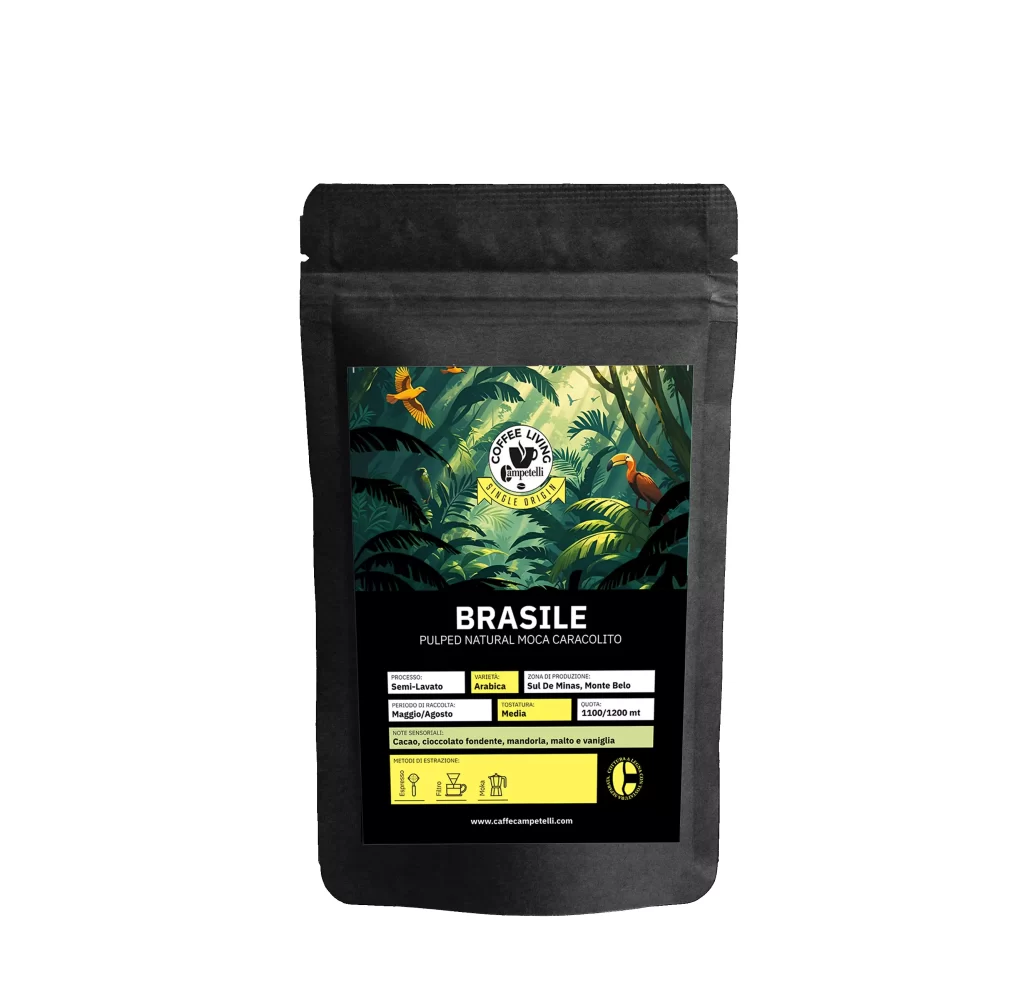
Brazil Moca Caracolito
It has a light-to-medium body, moderate acidity, and notes reminiscent of cocoa, dark chocolate, almond, malt, and vanilla. In this comparison, it is the smoothest option, making it easy to detect its sweetness and notes of cocoa and nuts.
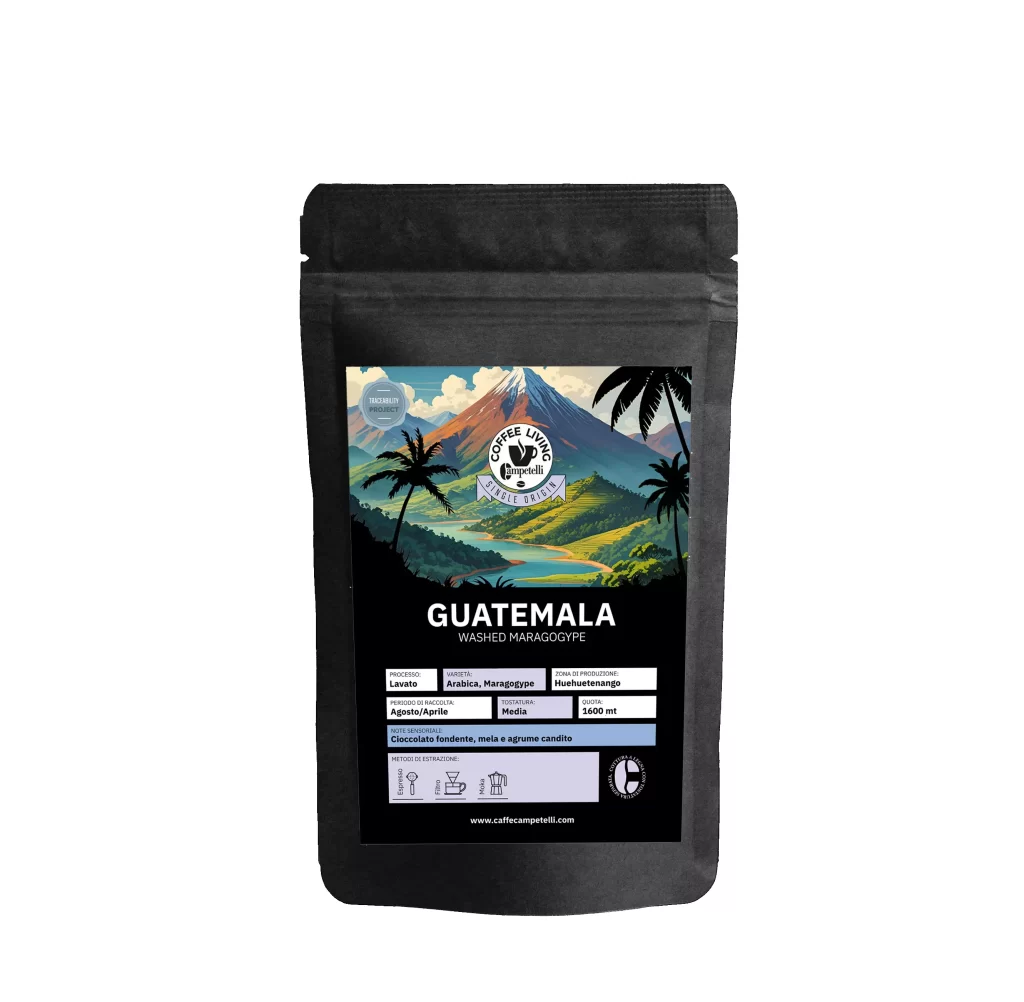
Guatemala Maragogype
This coffee has a livelier character, with medium acidity and notes of fruit, candied citrus, cocoa, and almond. When compared to the Brazilian coffee, it highlights just how much a fresher, fruitier profile can influence your enjoyment of the coffee.
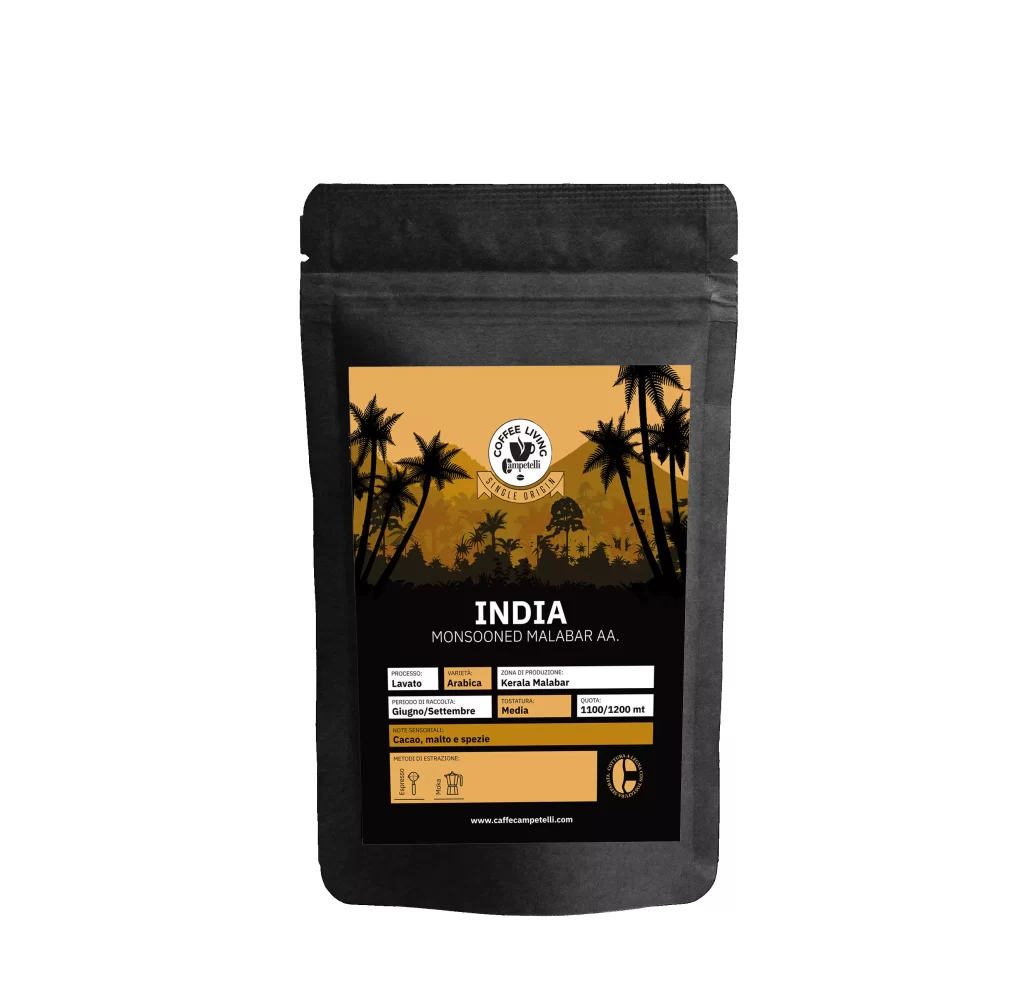
India Monsooned Malabar
This coffee offers yet another perspective in the comparison, characterized by smoothness, an intense aroma, spicy notes, and good length. It is useful for assessing how much spice, aromatic intensity, and length of flavor influence the final preference.
It isn’t necessary for one of the three to “win.” The real point of the tasting is to understand why one cup appeals to us more than the others.
Recommended Products
Your next cup will be a more conscious choice
After a tasting like this, you probably won’t be able to describe a coffee like a professional taster, but that’s not the goal. Instead, you’ll have learned to recognize some differences and, above all, to understand which ones tend to make you prefer one cup over another.
From that point on, choosing a new coffee becomes easier. If you’ve discovered that you’re looking for more body, greater sweetness, or more lively and aromatic profiles, you can use this information to guide your coffee selection based on your tastes.
The important step has already been taken: it’s not just “I like this coffee, ” but “I’ve started to understand what I like about coffee.”
FAQ
How many cups of coffee are needed for a coffee tasting at home?
Three coffees are a good place to start. They allow you to make a fairly clear comparison without making it difficult to remember the differences between one cup and another. The important thing is to choose coffees that are different enough to make the characteristics of each one noticeable.
Should you drink water between cups of coffee?
It can be helpful to take a small sip of plain water between tastings, especially if the coffees are very different or particularly intense. This simply helps reset your palate to a more neutral state before moving on to the next cup.
Can you do a tasting with a moka pot or an espresso machine?
Yes. You don’t need to use a professional method: you can taste-test the coffees using the method you normally use at home. The key is to prepare all the cups under the same conditions, keeping the dose, water, grind size, and extraction time as consistent as possible.

