
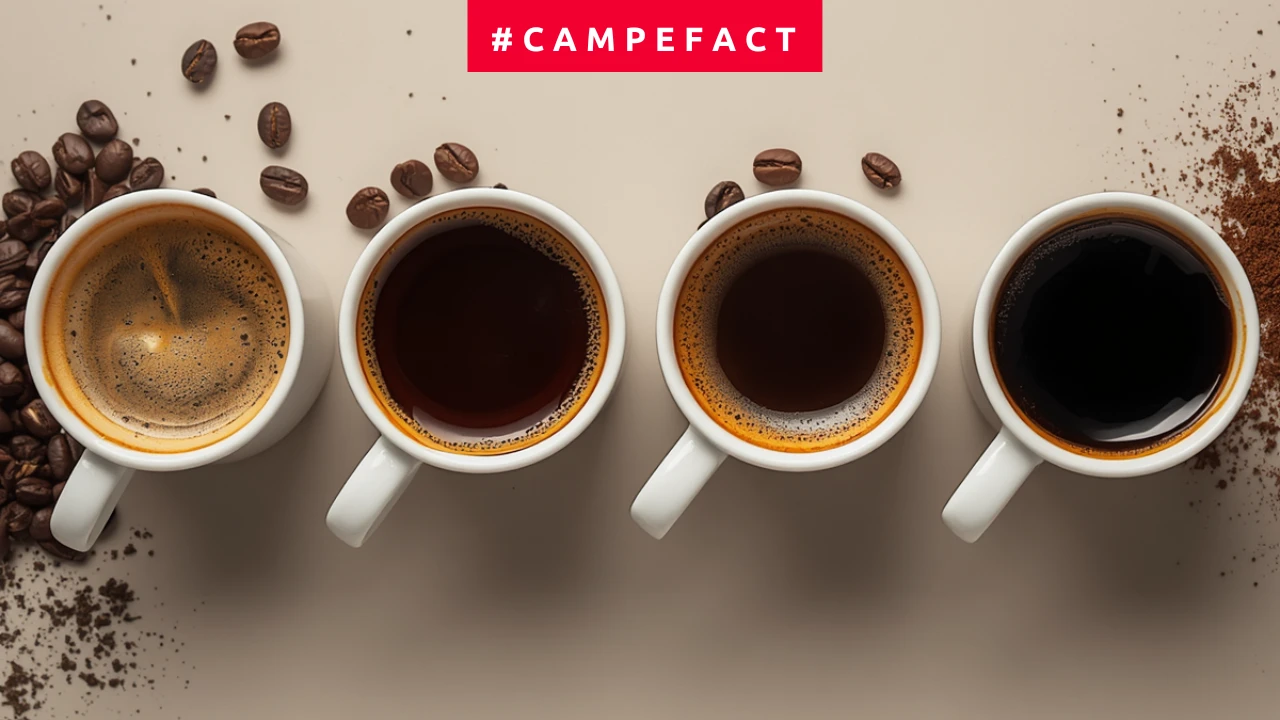

Choosing coffee may seem simple—until you have to distinguish between a blend that’s intense, full-bodied, creamy, or aromatic. These terms are often used interchangeably, but they describe different sensations. There’s no single “best” blend. There’s only the one that best suits the flavor you want to enjoy in your cup every day. To find it, you need to consider both the coffee’s characteristics and your drinking habits.
“Strong,” “full-bodied,” “creamy,” and “aromatic” do not mean the same thing
To understand how to choose coffee, you first need to recognize the sensations it evokes. An espresso can be intense without being very bitter, or aromatic without necessarily being delicate.
Intensity refers to the overall impression of strength. It depends on a combination of aroma, body, roast, and aftertaste. It does not directly measure the amount of caffeine.
Body refers to the texture perceived in the mouth. A full-bodied coffee feels denser and richer, while a light-bodied coffee leaves a less enveloping sensation. The crema is the layer that forms on the surface of the espresso. It contributes to the appearance and the initial sensation in the cup, but it does not represent a distinct flavor profile. It also depends on the blend, the freshness of the coffee, and the extraction.
Sweetness softens the flavor profile and lessens the perception of bitterness.Aromaticity, on the other hand, refers to the richness and distinctiveness of the aromas. An aromatic coffee can have a light flavor or a more pronounced presence. The word “delicate” generally describes a coffee with a less aggressive profile. It does not necessarily mean watery, lacking in body, or lacking in aroma.
Bitterness is only one component of flavor, while persistence refers to how long the sensations linger after a sip. Strong, bitter, full-bodied, and persistent are therefore not synonyms.
Imagine two espressos with a similar crema. The first might be sweet and aromatic, with a smooth finish. The second might be full-bodied and leave a stronger aftertaste that lingers longer. They look similar, but the experience is different.
Start with your habits, not just the intensity
The information on the package is helpful, but it’s not enough to determine which coffee to choose. Your daily habits can better reveal which characteristics really matter.
Try asking yourself a few questions:
- When you drink coffee without sugar, do you easily notice the bitterness?
- Do you add milk and still want the espresso flavor to be recognizable?
- Do you prefer a smooth texture or a lingering finish?
- Does a mild coffee seem a little unsatisfying to you?
- Would you like to have coffee in the afternoon or after dinner, too?
- Are you looking for a familiar flavor or something a little more unconventional?
Those who drink espresso without sugar might appreciate more sweetness and balance. Those who often make a cappuccino or a caffè macchiato might prefer a more intense and lingering blend that stands out even when combined with milk.
However, it’s important to distinguish between the characteristics of the blend and preparation issues. When using a moka pot, factors such as the amount of water, the amount of coffee, and the heat level can make a difference. With capsules and ESE pods, compatibility, cleanliness, and the proper functioning of the machine also play a role. Before changing your coffee blend, it may therefore be helpful to consult the guide on ground coffee for moka pots, the guide on 44 mm ESE pods, or the in-depth article on choosing the right blend and strength for compatible capsules.
What to Look for in a Blend: Arabica, Robusta, and Roast Level
Personal preferences must be linked to the specific characteristics of the blend. Arabica, Robusta, and roast level provide useful clues, but no single factor alone can predict the final result.
Arabica tends to contribute to sweetness, balance, and aromatic complexity. Robusta can enhance body, crema, and aftertaste. These are general tendencies, not absolute rules. Arabica is not always superior, and Robusta is not necessarily synonymous with low quality. What matters is the selection of origins, processing, blend composition, and roasting. By combining different varieties, the roaster can seek a precise balance between aroma, structure, and the longevity of the flavor.
Roasting also affects our perception. A darker roast can make the roasted and bitter notes more pronounced. A more balanced roast can better preserve the sweetness and aromatic characteristics. The result, however, depends on the coffee used and how it is roasted.
To help you decide, always consider the overall profile. A high proportion of Arabica can be appealing if you’re looking for roundness and aroma. A blend with a higher proportion of Robusta may be better suited to your desire for body and length.
Four flavor profiles to help you find the right blend
Now you can turn your preferences into a concrete choice. The following four profiles are not ranked; they address different needs and may also be suitable for different times of the day.
Round, sweet, and aromatic
This profile is ideal for those seeking balance and smoothness. The coffee should be recognizable, but not dominated by an aggressive flavor or lingering bitterness. It’s a good choice, for example, for those who drink espresso without sugar and want to better appreciate its natural sweetness. It can also satisfy those who prefer a mild flavor for everyday enjoyment.
The Gold Blend capsules, described as full-bodied, round, sweet, and aromatic, cater to this preference. If this profile sounds like you, you can learn more about the characteristics of the Gold Blend in its product description.
Intense, bold, and lingering
An intense coffee must have a distinct character and leave a recognizable aftertaste. What matters most in this profile are the initial intensity and the lingering finish—not simply bitterness.
It may be suitable for those who find mild blends unsatisfying. It’s also useful when adding milk and you want the espresso’s flavor to remain clearly discernible. The Miscela Red capsules are recommended for those looking for an intense, bold, full-bodied, and long-lasting espresso. Check out the product description if you’re looking for a strong flavor and a long-lasting aftertaste.
Full-bodied and full of character
In this profile, the main characteristic is not the initial strength, but the texture perceived in the mouth. The coffee should appear structured, full-bodied, and possess a personality distinct from that of more traditional blends. It is a suitable choice, for example, for those who want to change up their usual espresso without simply seeking a higher intensity. The goal is to find greater structure and a different balance between body and aroma.
The Oriente Blu capsules, made from Indian Robusta beans with a touch of Arabica, meet this need with a profile that emphasizes body and character. Check out the product page if you’re looking for a well-structured, less conventional blend.
Decaf but full-bodied
A decaf doesn’t have to taste weak or watery. It can retain its sweetness, body, and full-bodied flavor while still meeting the need to reduce caffeine intake. This profile is ideal for those who enjoy an espresso in the afternoon or after dinner. It’s also suitable for those who want to limit their caffeine intake throughout the day without sacrificing a satisfying cup of coffee.
Diamond Dek capsules offer a sweet, full-bodied decaf profile. Check out their product page if you’re looking for less caffeine but want to keep the richness and sweetness.
Which Coffee Should You Choose? A Quick Guide
The choice becomes easier once you identify the sensation you don’t want to give up. The table summarizes the four options without ranking the blends.
| If you’re looking for, above all… | Consistent blend |
|---|---|
| Roundness, sweetness, and aromatic richness | Gold Blend |
| Intensity, determination, and persistence | Red Blend |
| Body, Structure, and Character | Blue East |
| Less caffeine, but a full cup | Diamond Dek |
Think about the coffee you drink most often and choose the profile that best describes you. You can then check the corresponding product page to see its composition, roast, and sensory characteristics.
Frequently Asked Questions About Choosing Coffee
Some doubts arise from the imprecise use of words like “strong” or “creamy.” The following answers clarify the aspects that most often make it difficult to choose a blend.
Does stronger coffee always contain more caffeine?
No. Intensity describes the sensation experienced, while caffeine content depends on the composition, dosage, and preparation.
What is the difference between a strong coffee and a full-bodied coffee?
“Strong” is a general term used to describe the impact of coffee. “Full-bodied,” on the other hand, refers to its texture and the perceived weight in the mouth.
Is a coffee with a lot of crema necessarily full-bodied?
No. The crema refers to the surface layer of the espresso, while the body describes the consistency of the liquid. An espresso can have a distinct crema and a relatively light body.
Is it better to choose Arabica or Robusta?
It depends on the desired result. Arabica tends to enhance sweetness and aroma, while Robusta can contribute body, crema, and aftertaste. The overall quality of the blend is always what matters.
What kind of coffee should you choose if you don’t like bitter coffee?
It’s best to look for roundness, smoothness, and balance. An aromatic or intense coffee isn’t necessarily very bitter, so you shouldn’t rely solely on the stated intensity.
Can a decaf coffee be full-bodied and have a lingering aftertaste?
Yes. Reducing the caffeine content does not prevent the coffee from retaining its body, sweetness, and a good finish.

