
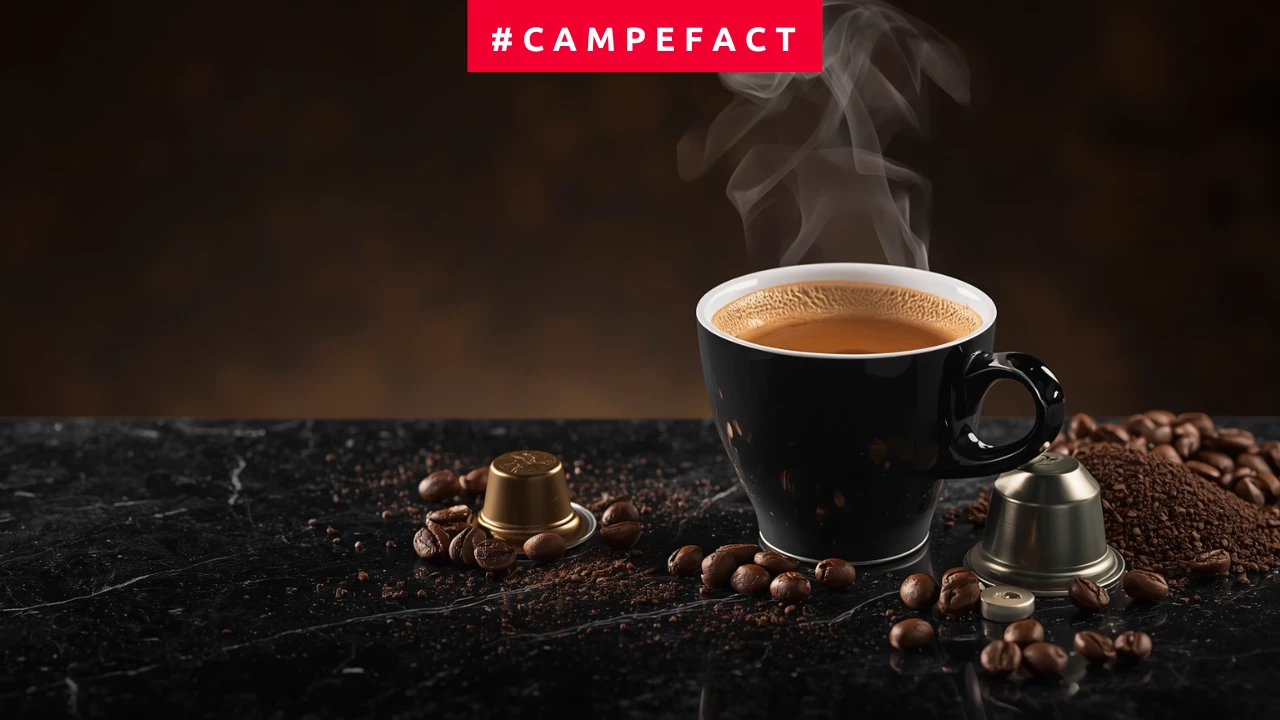

For years, decaffeinated coffee has been associated with a less intense experience than traditional espresso. Many consumers remember it as a flat coffee with little persistence and a limited flavor profile. Today, however, the world of decaffeinated has changed dramatically. Modern decaffeination techniques and greater attention to the selection of blends result in coffees that are balanced, creamy, and rich in aromatic nuances.
The final quality in the cup depends not only on the absence of caffeine, but also on the composition of the blend, the level of roasting, and the method used during processing. In this article we will look at how decaffeinated coffee is produced, what elements influence the final taste, and why a quality modern decaffeinated coffee can offer an experience much closer to that of traditional espresso than in the past.
How caffeine is removed from coffee
Decaffeination is the process by which most of the caffeine naturally present in the green coffee bean is removed, prior to roasting. The goal is to reduce the caffeine content while preserving the sensory and aromatic characteristics of the blend as much as possible.
Several decaffeination methods have been developed over the years. Among the most popular are the water method, the carbon dioxide process, and some techniques using food-approved substances in controlled environments. Each system can affect the balance, body and aromaticity of coffee differently.
Quality modern decaffeinated beans seek to maintain structure, sweetness and persistence in the cup, avoiding the flat profile that has characterized several industrial decaffeinated blends for many years. For this reason, in addition to the decaffeination process, the selection of origins, the balance between Arabica and Robusta, and the level of roasting chosen by the roastery become crucial.
Does decaffeinated really have less taste?
One of the most common beliefs is that decaffeinated coffee automatically has a less intense taste than a classic espresso. In reality, the final quality depends mainly on the raw material used and the care taken in processing the blend.
A decaffeinated blend made from carefully selected and roasted beans can retain much of its aromatic richness. Body, crema, sweetness, and persistence do not depend solely on caffeine, but on the overall balance of the blend and the quality of roasting.
The most obvious differences often emerge in low-end industrial products, where low quality blends or overly aggressive roasts are used.
Instead, a well-built modern decaf can deliver a smooth, balanced, and pleasantly intense cup, much closer to the experience of a good espresso than many consumers imagine.

Diamond Dek capsules
For those looking for a balanced decaffeinated espresso compatible with the Nespresso® system, Diamond Dek Capsules are a solution designed to maintain good aromatic intensity even in the evening hours.
Arabica and Robusta in decaffeinated coffee
The composition of the blend plays a key role in defining the profile of decaffeinated coffee. The choice between Arabica, Robusta, or a well-balanced blend directly affects body, aromatic intensity, crema, and persistence in the cup.
Arabica is prized for its softer, more aromatic characteristics, with notes that can recall cocoa, dried fruit, and floral undertones. Robusta, on the other hand, generally contributes more structure, a firmer crema, and a stronger profile on the palate.
In modern decaf, many roasters choose to use calibrated blends between Arabica and Robusta precisely to preserve aromatic depth and roundness even after the decaffeination process. A well-constructed blend can help the coffee maintain body and persistence, avoiding the too-light feel that has characterized many industrial decaffeinated coffees for years.
Why some decaffeinated beverages come out “empty”
Not all decaffeinated coffees offer the same in-cup experience. One of the main differences depends on the quality of the raw material used and the way roasting and processing are handled after decaffeination.
In many low-end industrial products, low quality blends or very strong roasts are used, designed to standardize taste and cover up any flavor imbalances. This approach can lead to less complex coffees with reduced persistence and a flatter flavor profile. The balance of the blend also plays an important role. A carefully constructed decaffeinated can retain more roundness, body, and sweetness, providing a more balanced and enjoyable cup to drink.
In recent years many artisanal roasters have begun to pay more attention to the quality of decaffeinated coffee, treating it no longer as a simple alternative, but as a blend with its own characteristics and a well-defined identity.
When to choose decaffeinated coffee
Decaffeinated coffee is increasingly chosen not only by those who wish to reduce their caffeine consumption, but also by those who seek a softer cup at certain times of the day. The possibility of enjoying an espresso even in the evening hours, without giving up the ritual of coffee, is one of the most appreciated aspects for many consumers.
In recent years, modern decaffeinated coffee has been reevaluated even by those who, in the past, considered it a simple alternative to traditional coffee. In fact, the more curated blends manage to retain much of the aromatic structure of espresso, offering a smooth cup but still rich in body and persistence.
Choosing a good decaffeinated can be particularly attractive for those who consume more coffee throughout the day or want to limit caffeine without completely changing their habits. In these cases, blend quality, source selection, and roast level make a noticeable difference in the final result in the cup.
Those who prefer to brew coffee in mocha may also turn to solutions such as Diamond Dek decaffeinated ground coffee, designed to maintain good aromatic roundness even without caffeine.
Roasting and decaffeinated: why they make a difference
Roasting also directly affects the end result of a decaffeinated coffee. After the decaffeination process, the bean may become more sensitive and react differently during roasting than a traditional coffee.
Too aggressive roasting risks covering up the aromatic nuances of the blend, accentuating bitter notes or an overly dry finish on the palate. Conversely, carefully designed roasting can help the coffee retain more sweetness, roundness and harmony in the cup.
For this reason, many artisanal roasters pay special attention to the roasting curve of decaffeinated coffee, seeking to enhance the body, persistence, and natural aromas of the blend.
The result can be a more harmonious cup that can come very close to the experience of a good traditional espresso.
Modern decaf is no longer a compromise
For a long time, decaffeinated was considered an “opt-out” choice. Less caffeine, sure, but often also less character in the cup. This was the most widely held perception.
Today the situation has changed. Some roasters have begun to treat decaffeinated with the same attention given to traditional blends, working on the selection of origins, roasting, and aromatic structure of the blend.
The difference is most noticeable in the texture of the cup. A good modern decaf does not simply aim to “look like” a classic espresso: rather, it tries to maintain body, roundness, and persistence, without covering everything up with overly aggressive roasts.
Of course, not all products achieve the same result. There are still very flat or standardized decaffeinated products, especially in the more industrial end of the market. However, when the blend is constructed more carefully, the end result can surprise even those who have always looked at decaffeinated with distrust.
Decaffeinated and coffee ritual
For many people, coffee is not just about caffeine. It’s about the moment. The break. The almost automatic act of brewing an espresso after lunch or at the end of the day.
It was in this everyday experience that decaffeinated started to change roles.
No longer simply a “lighter” alternative, but a choice capable of retaining much of the experience associated with traditional coffee. Aroma, cream, body. Consumer expectations have also changed: today, those who choose decaffeinated are unlikely to accept a product that is flat or lacks personality.
That’s why many people today choose practical solutions such as Diamond Dek decaffeinated pods, designed to keep a cup smooth, creamy, and pleasant even into the evening hours.
For this reason, many roasters are working on more curated blends and less aggressive roasts. The goal is not to perfectly imitate a classic espresso-a result that is often difficult to replicate-but to achieve a cup that remains satisfying and recognizable.
And when the work on the mixture is done well, the difference can be felt immediately.
What to really expect from good decaffeinated coffee
Not everyone is looking for the same thing in the cup. There are those who prefer a softer coffee, those who still want a compact and persistent crema, and those who do not accept losing that intense feeling typical of Italian espresso.
And it is here that many decaffeinated products play it all out.
For years the problem was not only caffeine reduction. It often lacked the rest: structure, aromatic depth, and persistence. Some products aimed primarily to simplify the taste, but sacrificed personality and complexity of the blend.
Today things are changing. Not everywhere, of course. But the average level of some modern decaffeinated beverages has risen much higher than in the past.
The most careful roasters work to maintain roundness, body and persistence, avoiding overly invasive roasting or blends constructed without a true aromatic identity. Sometimes little is needed: better selection of origins, more precise roasting, and more attention to blend construction.
The result is not coffee that is “equal” to a traditional espresso. Nor perhaps does it have to be. But a good decaf today can safely provide a satisfying, recognizable and enjoyable cup to drink every day.
FAQ – Frequently asked questions about decaffeinated coffee.
Does decaffeinated coffee still contain caffeine?
Yes, but in very small amounts compared to a traditional coffee. Decaffeination removes most of the caffeine in the bean, but does not remove it completely.
Does decaffeinated have less taste than a traditional espresso?
Not necessarily. The final quality depends mainly on the blend, roast and processing. A good modern decaffeinated can maintain body, crema, and good aromatic persistence.
When is it best to choose decaffeinated?
Many people choose decaf in the evening hours or when they want to limit their caffeine consumption during the day without giving up the ritual of coffee.
Do Arabica and Robusta also influence the taste of decaffeinated coffee?
Yes. Arabica tends to offer softer, more aromatic notes, while Robusta generally contributes more structure and creaminess in the cup. Even in decaffeinated, the balance between the two varieties clearly affects the final result.
Why do some decaffeinated beverages come out “flatter” than others?
It depends on several factors: quality of raw material, roasting and composition of the blend. In more industrial products, the taste may be less complex and less persistent.

