
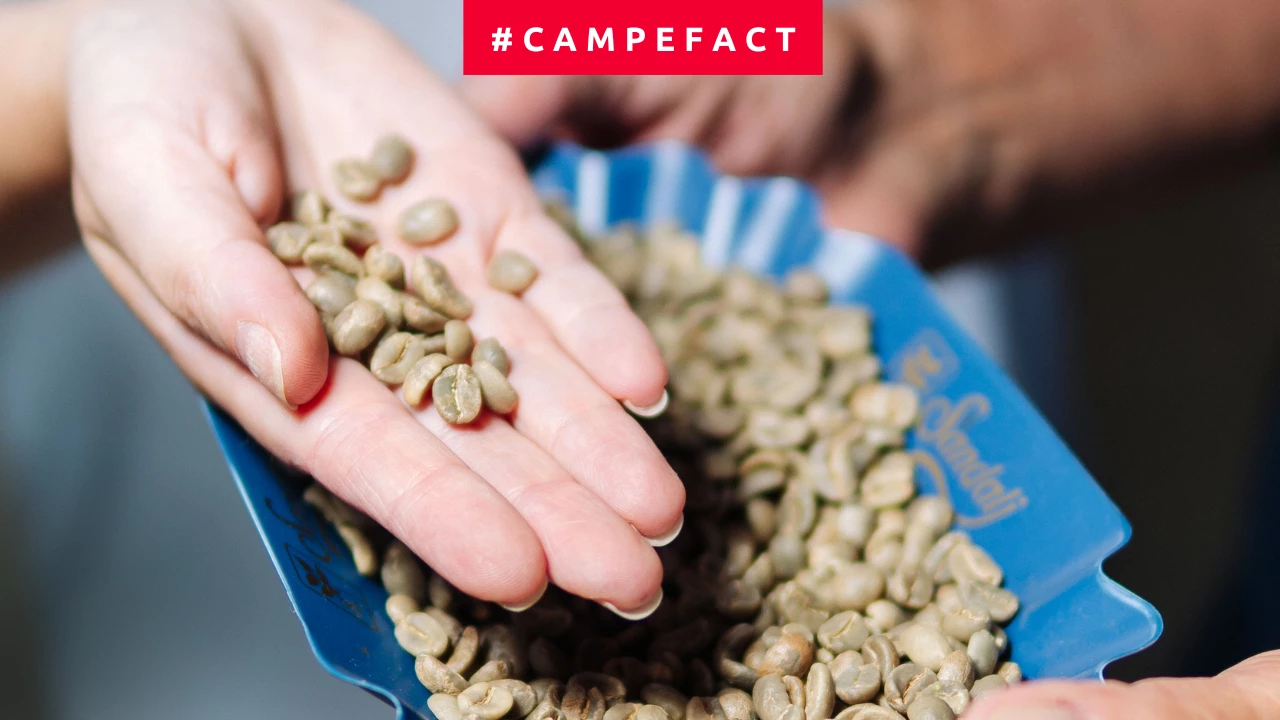


What is sieve (screen size) and why it affects yield
Sieve means grain size calibration expressed in sixty-fourths of an inch (e.g., 15/64, 17/64, 18/64). Uniform selection allows:
- Smoother roasting: grains of similar size receive the same heat and develop consistent flavors.
- More predictable extraction: grinding, flow and solubility are more consistent.
- Less waste: fewer grains that are too small or “elephant” roasting differently.
Practical directions: highland washed origins often have riddles 16-18; naturals and some lower-altitude Arabicas show more variability.
For extraction profiles and yield by method, read our guide to 44mm ESE wafers
Primary and secondary defects: what they are in practice
The term defect indicates a nonconformity of the grain that can alter aroma, taste, body, and cleanliness. Operationally, two families are distinguished:
Primary defects (high impact in cup)
- Black/fermented beans (black, sour): unpleasant, burnt or acid-acetic notes.
- Fungus/mold: off-flavors earthy, stale.
- Foreign bodies (stones, small wood, parchment peels/chips): mechanical hazards, pest flavors.
- Severe insect damage: loss of substance, irregular extractions, bitter notes.
Secondary defects (average impact, cumulative)
- Broken or chipped grains: roast faster, increase bitterness.
- Quakers (immature/clear grains): incomplete development, flat and “papery” profile.
- Lightly stung grains (insects): unstable extraction, reduced body.
- Shells, elephant beans: anomalous shapes, disuniformity in roasting.
- Parchment/silver residues: possible dry or astringent notes.
In summary: a few primary flaws are enough to undermine the cup; the secondary ones weigh when they add up.
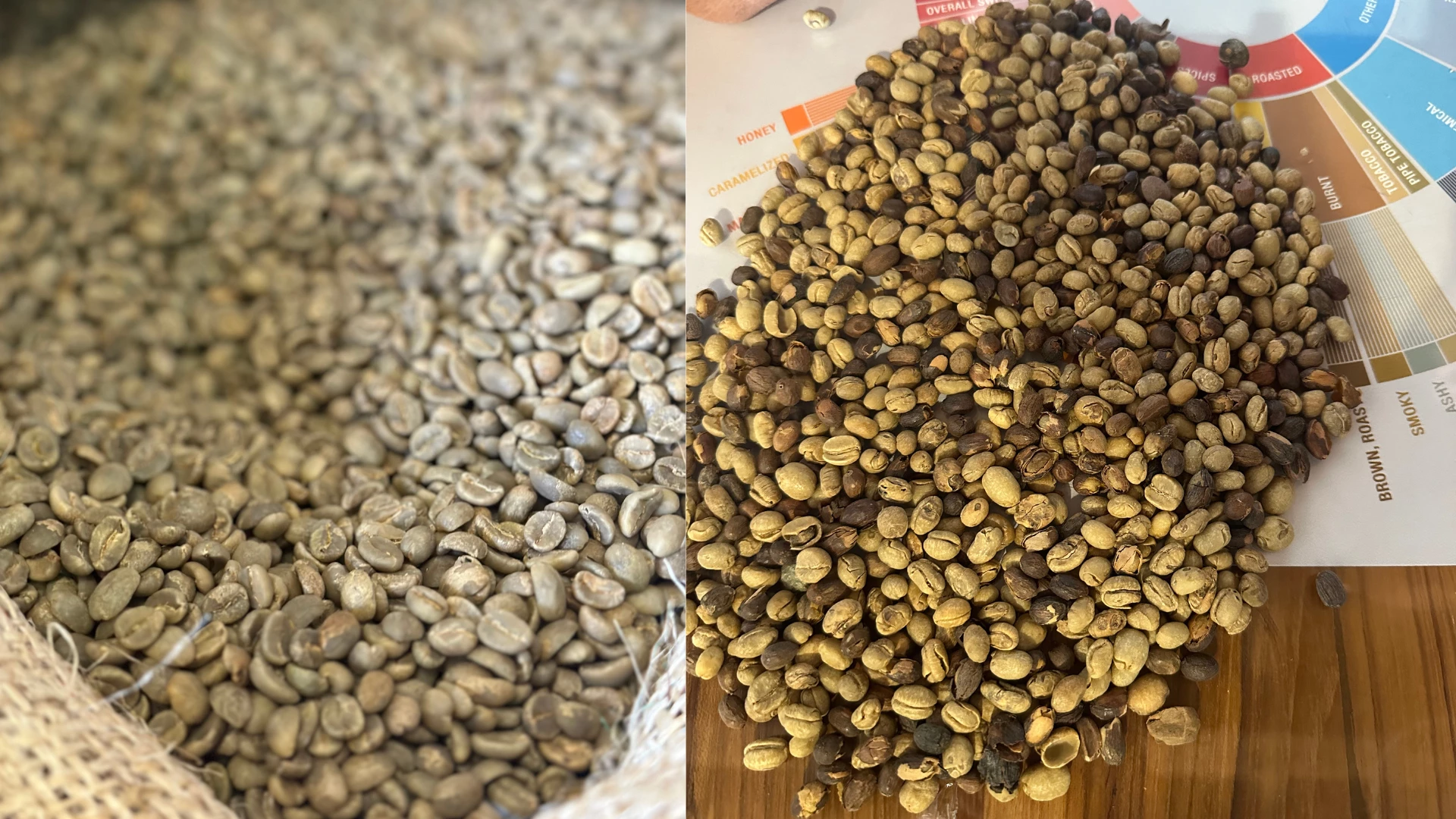
How to recognize them by looking at the picture
Left (selected): uniform green color, homogeneous sieve, intact surfaces; no black grains, sour beans, obvious breaks.
Right (defective): strong heterogeneity in size and color; presence of black/fermented, broken, shell, immature grains; residues and foreign bodies visible.
Effects in roasting and extraction
Heat uniformity: selected batches react predictably to stages (drying, Maillard, first crack). Batches with many defects require corrective profiles and often give unbalanced cups.
Aromatic cleaning: fewer defects → less off-flavors (soil, cardboard, vinegar, ash).
Body and sweetness: proper selection and maturation → more developed sugars and controlled bitterness.
If you encounter recurring problems in the cup, consult ESE wafer troubleshooting
Examples of defects and impact in the cup
Defects of green coffee: examples and sensory impact
| Defect | Category | Effect in roasting | Effect in cup |
|---|---|---|---|
| Black/fermented beans | Primary | Burnt risk, uneven curves | Aggressive bitterness, acetic, unpleasant odors |
| Mold/fungus | Primary | Irregular development | Earthy, stale, persistent defect |
| Broken/chipped | Secondary | Toasted too quickly | Astringency, early bitterness |
| Quakers (immature) | Secondary | Chronic underdevelopment | Flat, papery, little sweetness |
| Shell/elephant beans | Secondary | Abnormal heat reception | Unevenness, aromatic imbalances |
| Foreign bodies | Primary | Mechanical hazards/contamination | Off-flavors, coffee grinder hazard |
How we work at Caffè Campetelli: selection and quality control
Selection by sieve: consistent batches for repeatable roasts.
Critical defect rejection: visual and mechanical checks before roasting.
Profiling and cupping: in-cup testing to confirm sweetness, body and cleanliness.
Transparency: we communicate sensory profiles and extraction recommendations at home.
FAQ on green coffee
Is the bigger sieve always better?
No. Sieve (screen size) measures grain size, but quality depends primarily on uniformity, ripeness, and absence of defects. Large sieves (e.g., 17-18) can promote slower roasting and full body, but only if the grains are uniform and well ripened. A “mixed” batch (14-18) roasts unevenly: small ones cook too fast, large ones lag behind, with unbalanced cups.
Which defects spoil the cup most?
The most devastating are the primary defects: black/fermented grains (black/sour), mold/fungus, and foreign bodies. Even a few such grains can overpower the entire extraction.
- Black beans (black beans)
Caused by out-of-control rotting/fermentation or poorly done drying. In roasting they develop tar/ash notes, aggressive bitterness and unpleasant persistence. It only takes 2-3 beans in 250 g to perceive distinct defects in the cup. - Sour beans (sour-fermented)
Often due to sour cherries or acid fermentation. They give volatile “acetic” acidity, pungent sourness, lean body and messy profile. They easily contaminate the batch. - Mold/fungus (moldy/musty)
Derived from wet storage or slow drying. Earthy, stale, “wet closet” aromas, very persistent and difficult to mask with roasting. - Foreign bodies (stones, wood, thick parchment)
In addition to the mechanical hazard to the coffee grinder, they release off-flavors (dust, wood, soil) and soil the profile.
Quakers can be seen after roasting: is it a problem with the green?
Yes. Quakers are immature beans (picked unripe or poorly selected) that, even when roasted properly, do not brown: they remain clear/beige. The cause is in green coffee: low ripeness = lower sugars and Maillard precursors → during roasting they develop little color and few flavor compounds.
Can I “save” a coffee with many defects by adjusting the extraction?
Only partially. Extraction adjustments can
How can I tell if a mixture has been selected well?
Look for transparency about origins, consistency between batches, clear sensory profiles, and consistency in the cup. At home, check for creaminess, sweetness, and cleanliness.

