
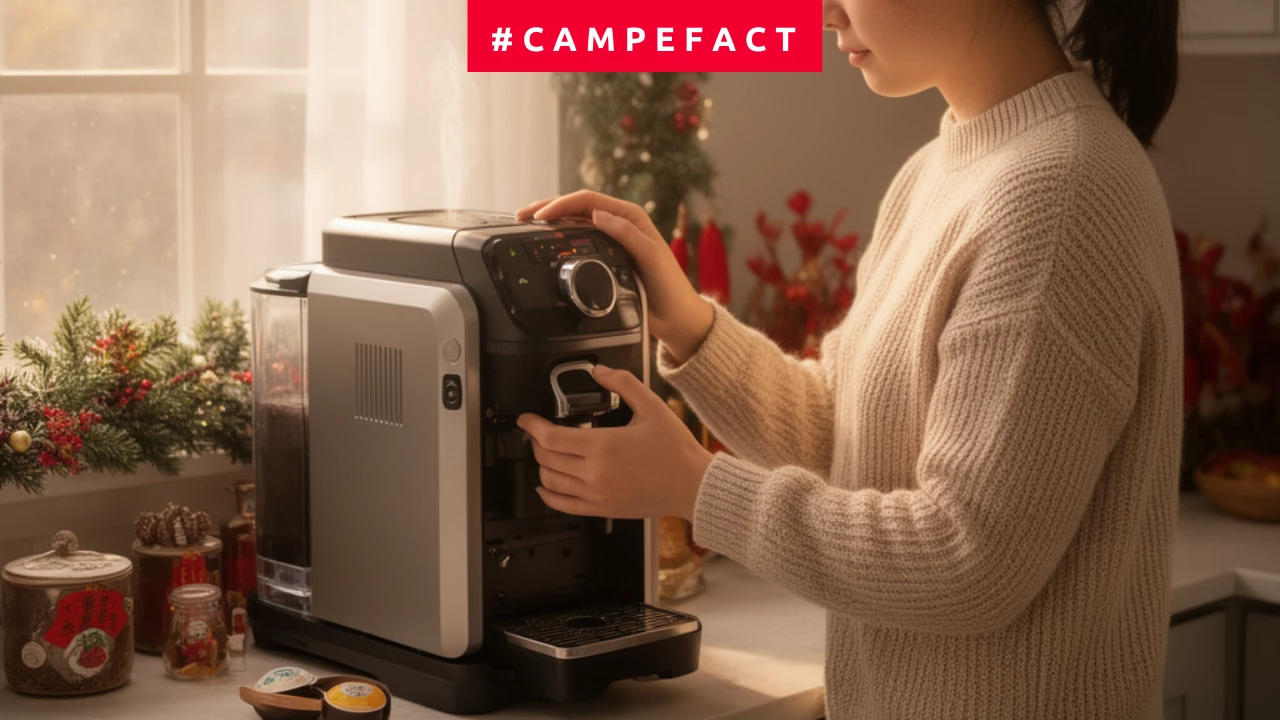


After weeks of “no-stop” coffee, the output of pod machines can drop: uneven crema, erratic flow, dull aromas. Here you’ll find a practical guide to bringing your machine back to optimal condition with targeted interventions on limescale, residue, and water. In closing, reusable checklist and in-depth FAQ.
Signs that indicate a need for maintenance
When the pod machine requires maintenance, it “tells” it in the cup and in the flow. Before taking action, recognize the typical signs: small, recurring anomalies that indicate limescale, residue or worn seals. If two or more appear, proceed with the full routine.
- Cream that collapses quickly or is too dark.
- Slow or jerky flow, lower than usual cup volume.
- Foreign odors or “flat” cup.
- Abnormal noises from the pump.
If you recognize at least two signs, perform the complete routine.
Complete routine in 5 steps
1) Descale properly
- Turn off and cool the machine.
- Fill the tank with descaling solution according to the manufacturer’s instructions.
- Start short cycles without a wafer until the reservoir is empty.
- Rinse: two tanks of clean water to remove residue.
Tip: The frequency depends on the water. With medium to high hardness it will be needed more often. Learn more about water choice in Water and pods: tap, filtered, mineral (URL_ACQUA_E_CIALDE).
2) Clean hand shower and unit
- Remove basket/disc (if provided), let soak with suitable detergent, and brush out holes.
- Clean waffle carrier and gaskets with soft cloth.
- Perform 3-4 vacuum flushes to clear the circuit.
3) Sanitize tank and cold circuit
- Wash tank and lid with warm water and mild detergent, rinse well.
- Avoid abrasive sponges; air dry to limit odors.
4) Check seals and pressures
- Inspect the assembly gasket: if cracked or shiny, replace it.
- Check thedocking of the shawl holder: it must be firm but not forced; a soft docking creates micro-leaks and poor cream.
5) Sensory reset: three test extractions.
- Use the same wafer and the same volume (25-30 ml).
- Evaluate cream, sweetness and cleanliness against your standard.
- If specific problems emerge, see Troubleshooting ESE pods..
Recommended intervals
Intervals are not the same for everyone: they depend on water hardness and frequency of use. Use these timings as a basis and anticipate maintenance if you notice drops in yield.
- Empty rinses: every day of use.
- Cleaning of the waffle rack/douche: weekly.
- Descale: 1 to 3 months depending on water hardness.
- Gaskets: quarterly check, replacement when hardened.
Water makes a difference
Part of the “post-holiday” problems is due to the water used. For stable extractions:
- TDS 80-120 ppm and hardness 3-6 °dH help cream and sweetness.
- Avoid chlorine and water that is too hard or too light.
Details and quick fixes in Water and pods: tap, filtered, mineral.
Checking compatibility and yield with pods
If, despite maintenance, the cup does not return as before:
- Check that the wafers are ESE 44 mm and not deformed.
- Open the single-dose pouches only at the time of use.
- Review the fundamentals in 44 mm ESE pods: compatibility and yield..
recurring problems and quick solutions
Problem → probable cause → solution
| Symptom | Probable cause | Solution |
|---|---|---|
| Slow / jerky flow | Lime scale in unit; clogged hand shower | Descale; clean hand shower; 3-4 empty flush |
| Poor or collapsing cream | Worn seal; water too light | Replace seal; use water with TDS 80-120 ppm |
| Bitter or “cooked” cup | Overheating; oily residue | Brief flush before extracting; clean cup holder |
| Dull aroma/flat taste | Old waffles; very hard water | Use fresh waffles; filter/soften water |
| Leaks from the assembly | Gasket or waffle carrier coupling | Replace gasket; check coupling |
Post-holiday mini-checklist
- Full descaling and double rinsing.
- Clean shower and shower caddy.
- Tank washed and dried.
- Gasket assembly checked/replaced if necessary.
- Three test extractions with the same wafer.
FAQ
How often should I descale?
It depends on water hardness and use. With average water, every 6-8 weeks is a good interval. If you notice jerky flow or poor crema, anticipate. A good practical indicator is the number of extractions: every 80-120 coffees do a complete descaling. If you use very hard water (>14 °dH), consider a filter or switch to water with TDS 80-120 ppm to lengthen intervals.
Can I use vinegar for descaling?
Best to avoid: it can leave odors and is not designed for internal alloys. Prefer food-grade descaling agents that are compatible with your machine. Dedicated products dissolve limescale without attacking gaskets and metals and rinse more easily. In addition, acetic acid can impregnate plastics and the tank-the residual odor alters the in-cup profile even after multiple rinses.
After descaling, the coffee tastes “weird”
Do at least two tank rinses and 2-3 vacuum extractions. If it persists, disassemble and rewash tank and drip tray. Also check the hand shower: detergent residue or dislodged limestone can retain odors. If you have been using highly chlorinated water, try a top-up with medium TDS water (80-120 ppm) and repeat a flush cycle.
Do waffles affect maintenance?
Yes. Intact single-serving pouches and uncrushed pods reduce residue and clogging. Avoid waffles that are misshapen or have damaged paper: they can leak ground into the unit and dirty the hand shower and seals. Store pods away from heat and humidity: oxidized oils leave patinas that are harder to remove.
I followed everything but the yield is still uneven
Check the actual volume in the cup (measure it): variations of 5-10 ml change a lot of cream and intensity. If the pump is very noisy or flow remains abnormal, consider a service overhaul (valves/seals). Finally, try a “fresh” reference wafer to rule out stock problems.

